ParTec

Supercomputer
ParTec technology powers world-leading supercomputers

ParTec technology powers world-leading supercomputers — including TOP500 systems JUPITER (#4) and Leonardo (#10) — and drives global energy-efficiency leadership with the three-time Green500 winner JEDI.

Supercomputer

ParTec is a key technological provider for several of Europe’s most powerful and most energy-efficient supercomputers. In the most recent TOP500 list of the worldwide fastest systems (Nov25), ParTec has participated substantially in two of the current top 10; #4th JUPITER and 10th Leonardo. Systems leveraging ParTec’s technology consistently achieve top rankings on the global Green500 list for energy-efficient high-performance computing, as shown by the three-time global winner JEDI (June 2024, November 2024, and June 2025).

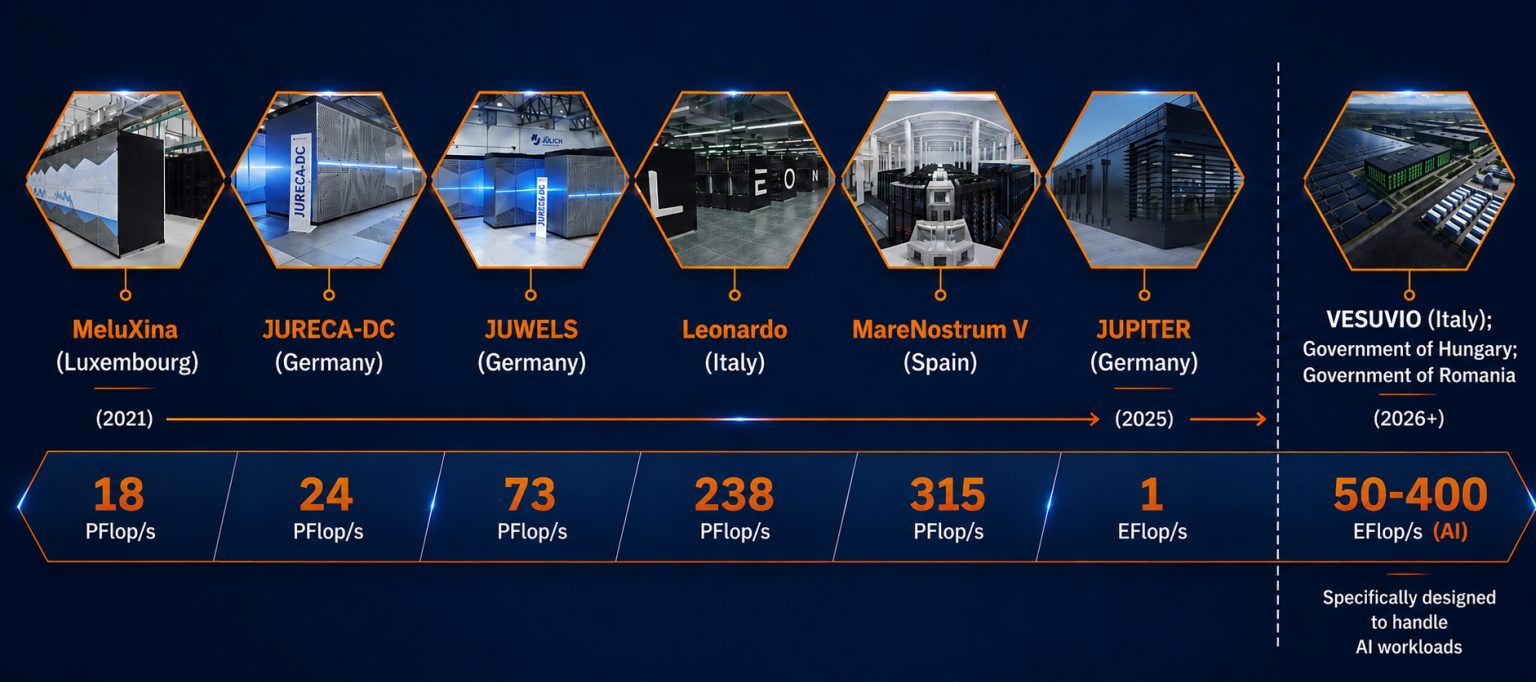
Examples of leading HPC/AI Systems Enabled by ParTec Technology

Copyright: Meluxina, LuxProvide; Forschungszentrum Jülich (JSC); CINECA, Barcelona Supercomputing Center

JUPITER

Research Centre Jülich, Germany

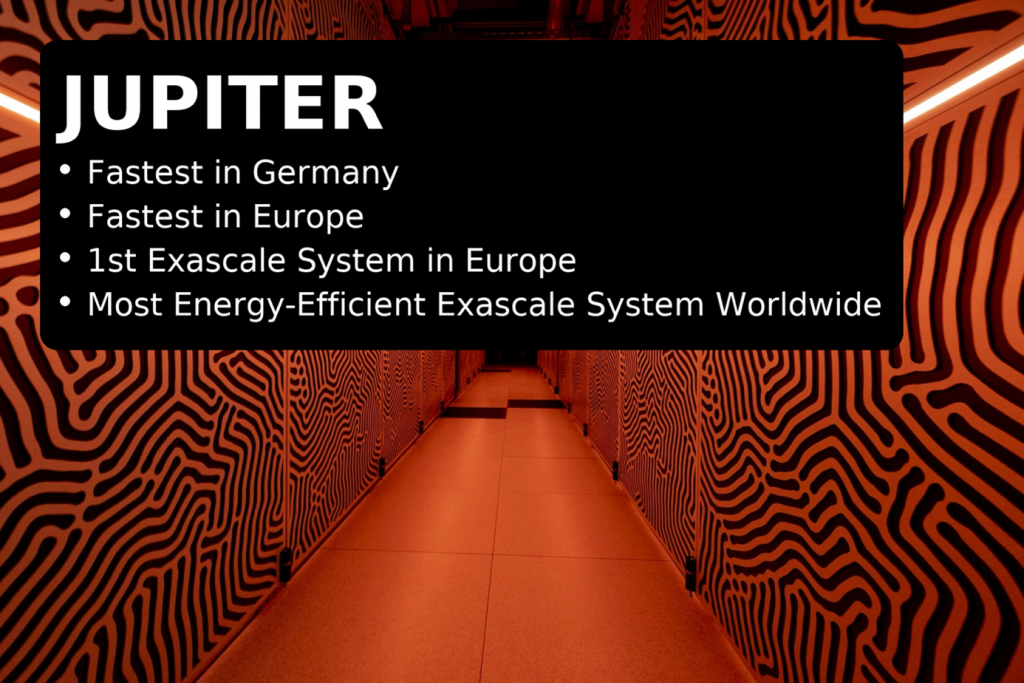
#1 in Europe
#4 in the global TOP500 List (November 2025)
#1 Most Energy-Efficient Exascale System Worldwide


Europe’s first Exascale Supercomputer

Copyright: Forschungszentrum Jülich, Text ParTec AG

JUPITER relies on ParTec’s patented dynamic Modular System Architecture (dMSA) and the JUPITER Management Stack (JMS) as its core technical foundation. The JMS is built upon ParTec’s ParaStation Modulo Software Suite, highlighting the company’s leading role in developing and providing the key technologies that make Exascale performance and high energy efficiency possible.

For more information about our technology, please click here.

JUPITER “Joint Undertaking Pioneer for Innovative and Transformative Exascale Research”, at Research Centre Jülich is the first European supercomputer in the exascale class, delivering a computing power of more than one quintillion floating-point operations per second. JUPITER achieves one double precision (64 bit)  ExaFLOP/s with  typically required for scientific simulations.

The system is built by a supercomputer consortium of ParTec and Eviden and was procured by EuroHPC JU in collaboration with the Jülich Supercomputing Centre (JSC).

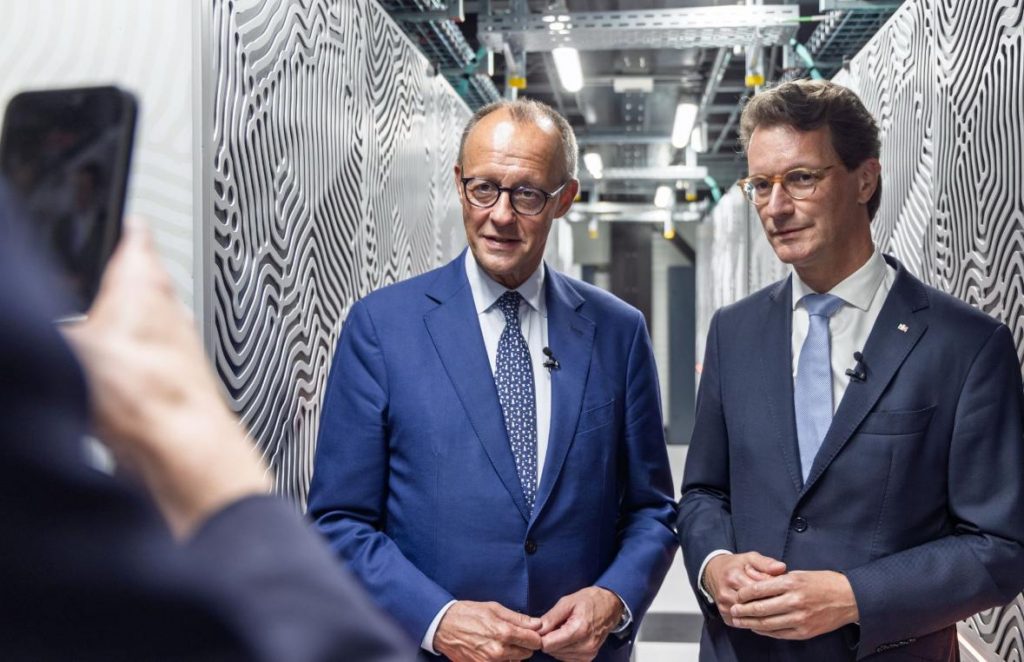
German Chancellor Friedrich Merz and Prime Minister of North Rhine-Westphalia Hendrik Wüst in front of JUPITER.

Copyright: Research Centre Jülich

HPCwire Reader’s Choice Award

JUPITER also received international recognition with the HPCwire Readers’ Choice Award in the “Top Supercomputing Achievement” category, proving that Europe is capable of competing on equal terms with global technology centers like the US and Japan.

Fast Construction Speed

The fact that the Booster part was designed and installed in less than two years after the 2023 contract was signed highlights ParTec’s and all the project partners’ ability to deliver complex, highly scalable computing architectures within exceptionally short timeframes.

All partners made significant contributions to the construction of this modular data center.

 AI Power

At lower numerical precision – such as in AI model training – JUPITER achieves a theoretical performance of over 40 ExaFLOP/s (8-bit floating-point calculations). This makes JUPITER one of the fastest AI computers in the world, with exceptional large-scale AI training performance due to ist high-performance interconnect network.

Breakthroughs

JUPITER is already delivering early scientific successes: more than 100 research projects are running on the system, including the simulation of a universal 50-qubit quantum computer and a global Earth system model at 1 km resolution, previously considered computationally unattainable. These early results already demonstrate the new possibilities that Exascale systems open up for research and industry. The weather model has won the 2025 Gordon Bell award at SC25 in St. Louis.

20-year partnership with Research Centre Jülich

The realization of JUPITER builds on more than 20 years of technological and trusted cooperation between ParTec and Research Centre Jülich. Systems such as JUROPA, JURECA, JUWELS, and the JUWELS Booster laid the foundations for the modular architecture now implemented in JUPITER. JUPITER is the first European supercomputer to apply this modular technology at Exascale magnitude.

Funding

JUPITER is funded jointly by the EuroHPC Joint Undertaking (EuroHPC JU) with 50% and the German Federal Ministry of Research, Technology and Space (BMFTR) and the Ministry of Culture and Science of the State of North Rhine-Westphalia (MKW NRW) with 25% each The system is operated the Jülich Supercomputing Centre (JSC) at Forschungszentrum Jülich. It forms the core of a European strategy for strengthening technological sovereignty in high-performance computing and laying the foundation for future AI and QC innovations. 

More information

For more information, please click here. To view an informative video, please click here

JEDI

Research Centre Jülich, Germany

3 x #1 on the Green500 Energy-Efficiency List
(June 2024, November 2024, June 2025)

Copyright: Forschungszentrum Jülich / Ralf-Uwe Limbach

JEDI is the first Module of the Supercomputer Jupiter. It is the three times leader of the global Green500 list, setting new standards for energy efficiency.

For more information, please click here.

JETI

Research Centre Jülich, Germany

Second Module of JUPITER

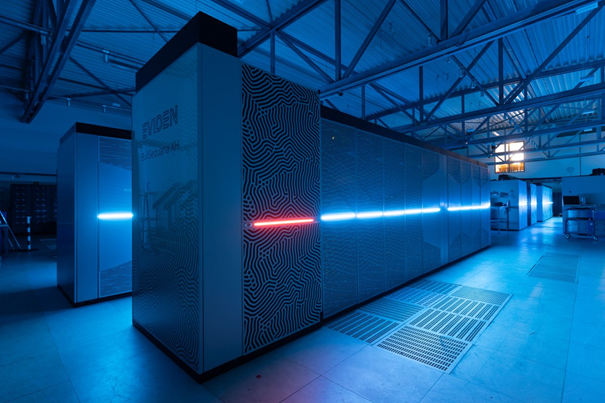
Copyright: Eviden

The completion of JETI, the second module of the JUPITER system, marks another major milestone. By doubling the performance of JUWELS Booster, Germany’s fastest supercomputer, JETI now ranks among the world’s most powerful. JETI is already one-twelfth of the final JUPITER system’s power, setting a new benchmark on the TOP500 list.

For more information, please click here.

MareNostrum 5

Barcelona Supercomputing Center, Spain

ACC module at #8
#14 of the TOP500 List (November 2023, November 2025)

1o0a9245

Copyright: Barcelona Supercomputing Centre

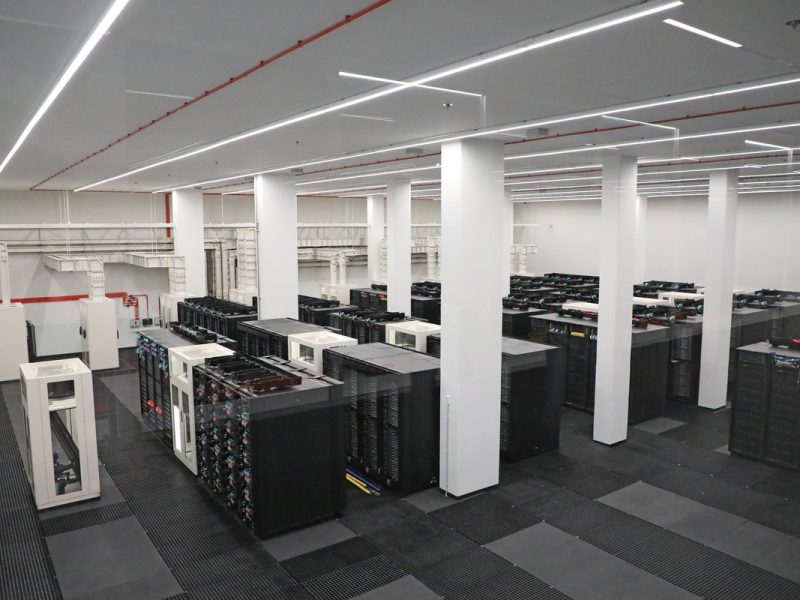
MareNostrum 5, a pre-Exascale EuroHPC supercomputer hosted by Barcelona Supercomputing Center – Centro Nacional de Supercomputación (BSC-CNS), was awarded to a consortium a subcontractor.

The system features four partitions using the Bull Sequana XH3000 or Lenovo ThinkSystem architectures with distinct technical characteristics, designed to meet the diverse needs of HPC users.

The complete system has an aggregate peak performance of 314 PetaFLOP/s. Its most powerful Booster module (Mare Nostrum 5 ACC) has 1120 nodes with four NVIDIA H100 GPUs each and delivers a total peak performance of 250 PetaFLOP/s.

The Cluster module (Mare Nostrum 5 GPP) uses 6408 CPU nodes and achieves a peak performance of 46 PetaFLOP/s; the module was ranked as #19 / #50 in the November 2023 and November 2025 TOP500 lists.

For more information, please click here.

Leonardo

Cineca, Italy

#4 / #10 of the TOP500 List
(June 2023, November 2025)

Bild10

Copyright: Cineca, Italy

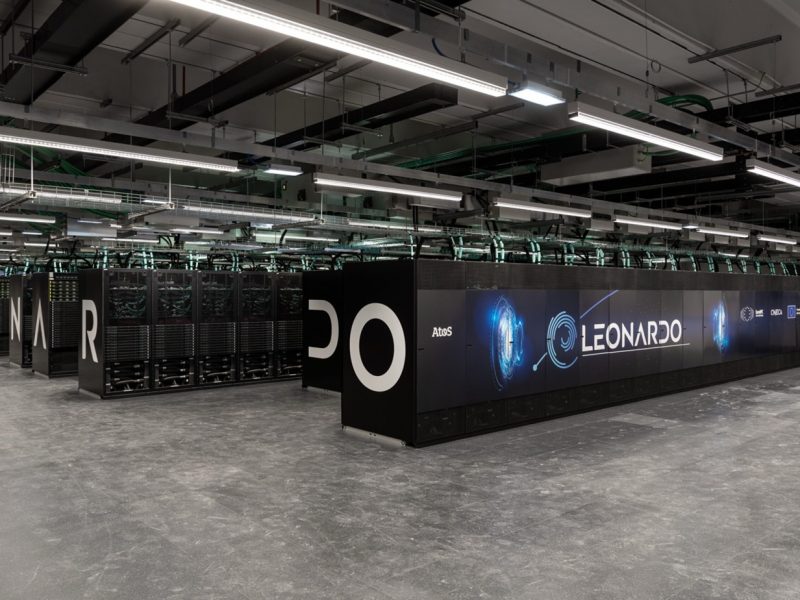
Leonardo is an Italian flagship supercomputer, hosted and operated by Cineca and installed in 2022 at the Technopole of Bologna. It is one of the three pre-Exascale systems selected and announced by the EuroHPC Joint Undertaking.

Leonardo ranked fourth in the TOP500 list in June 2023 and tenth in November 2025, with a projected peak performance of 306 PetaFLOP/s.  The system comprises 4,992 liquid-cooled Bull Sequana XH2000 compute nodes and NVIDIA A100 GPUs. It provides 111 PetaBytes of storage capacity and ranks at positions #2 and #8 in the June 2023 and November 2025 IO500 lists.

ParTec is one of the main technology partners.

For more information and an informative video, please click here.

JUWELS Booster

Research Centre Jülich, Germany

 #7 / #48 of the TOP500 List
(November 2020, November 2025)

JUWELS Booster

Copyright: Forschungszentrum Jülich

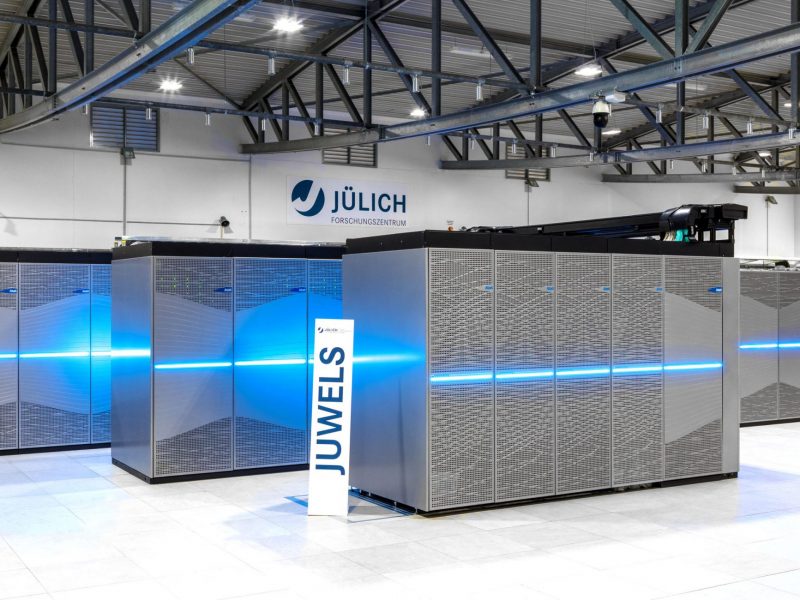
JUWELS (Jülich Wizard for European Leadership Science), a multi-Petaflop modular supercomputer managed by the Jülich Supercomputing Centre at Forschungszentrum Jülich, supports the Earth System modeling and AI research within the Helmholtz Association.

It was the fastest supercomputers in Europe at the time of its installation in 2020 and # 7 on the TOP500 list. JUWELS was Europe’s first accelerated full AI-compatible supercomputer using the ParaStation Modulo Software Suite and is operated as a modular system.

It  consists of two modules, the Booster module described here was the second to be deployed, and it uses 936 Bull Sequana XH2000 nodes with four NVIDIA A100 GPUs each. System peak performance is 71 PetaFLOP/s. It is a GPU-accelerated module with 70 PFlop/s peak.

For more information, please click here.

JUWELS Cluster

Research Centre Jülich, Germany

ranked #23 / #240 in the Top500 list
(June 2018 and November 2025);

#29 in the Green500 list
(June 2018) 

Copyright: Forschungszentrum Jülich

The first JUWELS module was the Cluster module. It was deployed in 2018 at Forschungszentrum Jülich, and uses 2567  BullSequana X1000  nodes. Its peak performance is  close to 10 PetaFLOP/s.  

It is operated with ParaStation Modulo Software Suite and Slurm.

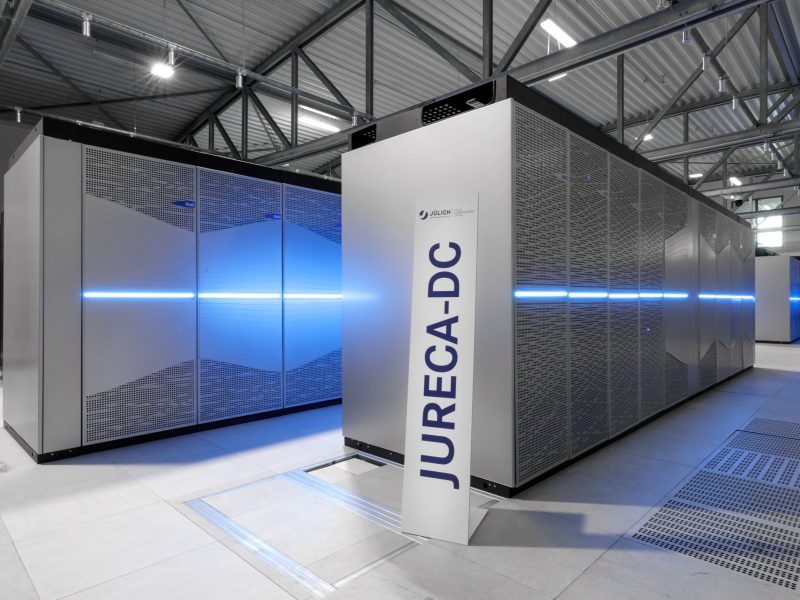
JURECA Data Centric Module

Research Centre Jülich, Germany

with the Booster module ranked #43 / #178 on the TOP500 List
(November 2021, November 2025)

JURECA-DC-Modul (DC für „data centric“)

Copyright: Forschungszentrum Jülich

JURECA-DC (DC for data-centric) is the successor of the  JURECA Cluster Booster, optimized for data-intensive applications.

The system consists of a Cluster module with 576 nodes, and a Booster module of 224 nodes, each equipped with four NVIDIA A100 GPUs. Peak performance of the Booster module is 14.5 PetaFLOP/s, and the Custer module can deliver up to 3.5 PetaFLOP/s.

Like its predecessor, JURECA-DC is operated as a single, heterogeneous system, using ParaStation Modulo & SLURM. Its innovative architecture enables seamless support for diverse high-performance computing and data analytics workloads.

For more information, please click here.

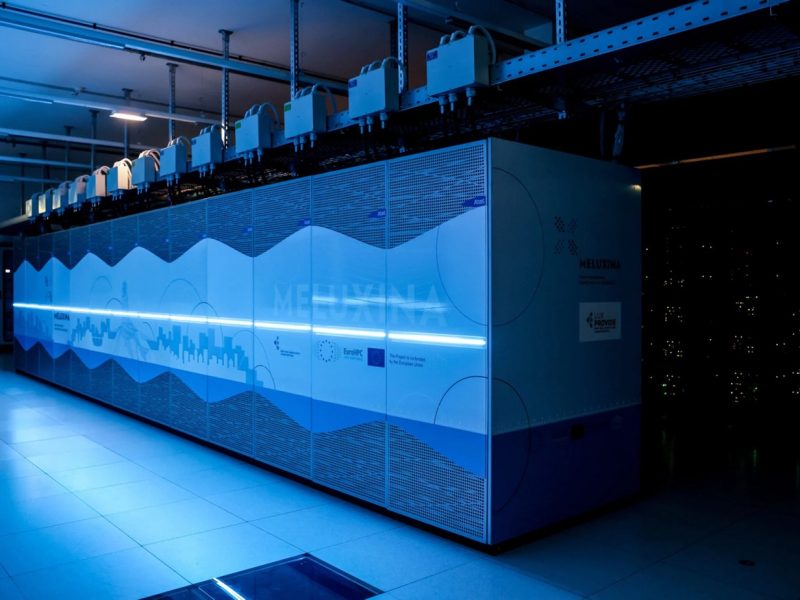
MeluXina

LuxProvide, Luxembourg’s national AI-Optimized HPC system

with its accelerator module at
#36 / #157 of the TOP500 list (June 2021, November 2025)

at #4 of the Green500 List/ #1 in the EU of the Green500 list (June 2021)

Bild12

Copyright: LuxProvide

In June 2021, LuxProvide commissioned MeluXina, Luxembourg’s EuroHPC supercomputer. The system delivers 18 PetaFLOP/s of computing performance and provides 20 PetaBytes of storage capacity.

MeluXina supports a broad range of workloads, including simulation, modeling, data analytics, and artificial intelligence, enabled by its scalable architecture and GPU-based AI acceleration. In the TOP500 ranking, the system entered at position 36th worldwide and was the most energy-efficient supercomputer in the EU at the time. It’s two modules have a peak performance of 3 PetaFLOP/s (Cluster) and 15 PetaFLOP/s (Booster).

Both modules of MeluXina use the ParaStation Software Suite.

For more information, please click here.

JURECA

Research Centre Jülich, Germany

 #30 / #76 # of TOP500 List
(November 2017, November 2020)

first modular HPL run worldwide

Copyright: Forschungszentrum Jülich

JURECA (Jülich Research on Exascale Cluster Architectures) was the world’s first operational supercomputer based on the dMSA.

It consisted of a Cluster Module with 1884 CPU nodes by T-Platforms with a peak performance of 1.7 PetaFLOP/s, ranked at # of the TOP500 list in November 2015, and a Booster module of 1640 Intel KNL Manycore nodes installed in 2017.

The complete Petascale Cluster/Booster system featured a heterogeneous network landscape of InfiniBand and Intel Omni-Path and was operated by the Jülich Supercomputing Centre at Forschungszentrum Jülich and ParTec as a single, heterogeneous system, using the ParaStation Modulo Software Suite and the Slurm scheduler.

With its novel architecture, it supported a wide variety of high-performance computing and data analytics workloads.

For more information, please click here.

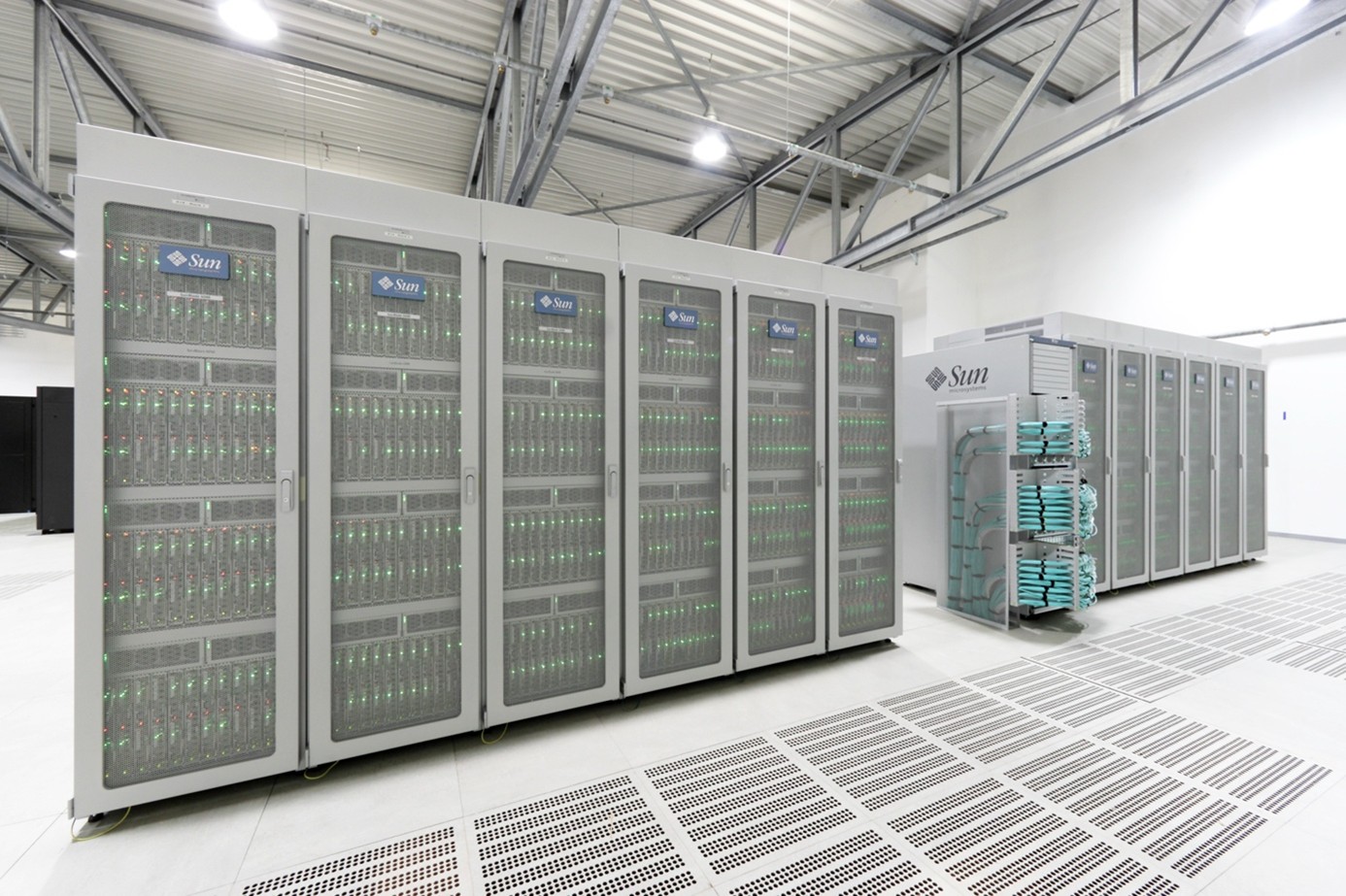
JUROPA

Research Centre Jülich, Germany

 ranking #10 in the TOP500 List
(June 2009; fastest cluster-supercomputer in TOP500)

#200 in November 2014

Europe’s first Petaflop System

Copyright: Forschungszentrum Jülich

JUROPA was the fastest cluster-supercomputer in 2009 in the Top500 list.

On 24 June 2015, JUROPA “Juelich Research on Petaflop Architectures” cluster computer was phased out of operation, having reached the end of its – very effective – lifetime of almost six years. The JUROPA concept was developed as an early co-design project at a time when nobody was talking about co-design. It followed a best-of-breed approach bringing together the most performant processors at this time from Intel, the Nehalem processors, the most efficient QDR Infiniband network by Mellanox, the most effective cabling and switch technology developed by SUN, the most evolved cluster computing software ParaStation by ParTec and the expertise of Europe’s most experienced system integrator and vendor, Bull.

Already in 2009, JUROPA achieved a total performance of nearly 300 TeraFLOP/s. JUROPA helped deliver a host of extremely valuable scientific results, ranging from astrophysics to security research, via quantum physics, brain research, biophysics and social sciences, etc. Many Science and Nature papers attest to the system’s success.